Introduction
PET Bottle Parts Identification is a fundamental concept in the beverage, food, pharmaceutical, and packaging industries. Understanding every part of a PET bottle helps manufacturers improve product quality, ensure consumer safety, and reduce production defects. From the bottle finish to the petaloid base, each section has a specific purpose that contributes to the bottle’s strength, sealing performance, appearance, and durability. At Food Beverage World, we are committed to providing industry professionals, students, and quality assurance experts with reliable technical knowledge about packaging and food safety. This guide explains PET Bottle Parts Identification in simple yet professional language, making it easier to understand how each bottle component affects manufacturing, quality control, and product performance throughout the production and filling process.
Why PET Bottle Parts Identification Is Important in the Beverage Industry
PET (Polyethylene Terephthalate) bottles are widely used because they are lightweight, recyclable, durable, and cost-effective. However, producing a high-quality PET bottle requires every component to be properly designed and inspected.
PET Bottle Parts Identification is essential because it helps manufacturers:
- Improve bottle quality.
- Reduce packaging defects.
- Prevent product leakage.
- Increase bottle strength.
- Ensure smooth filling and capping.
- Meet food safety and quality standards.
- Reduce production waste.
- Improve customer satisfaction.
For Quality Assurance (QA) and Quality Control (QC) professionals, identifying each bottle part is the first step toward effective defect analysis and process improvement.
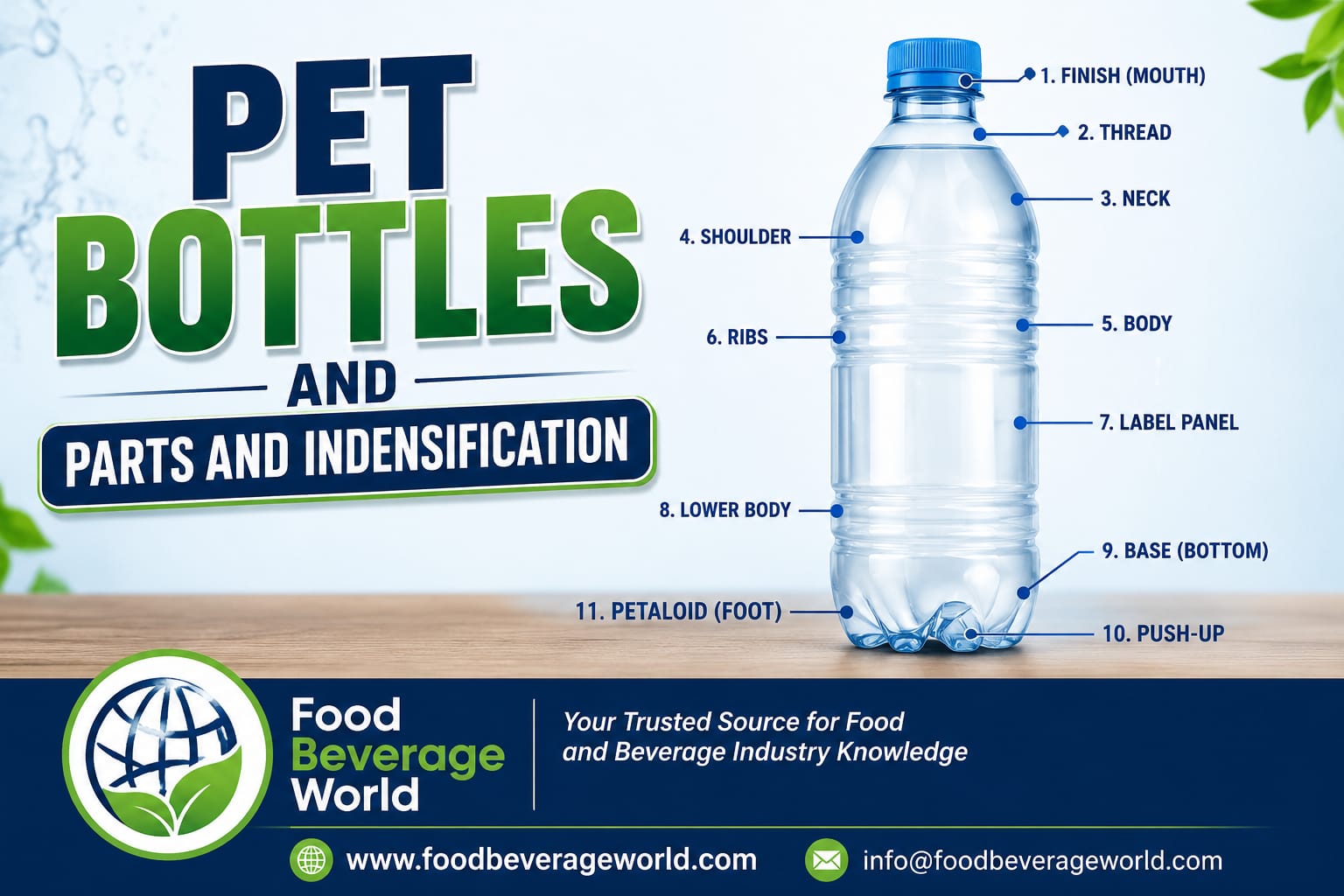
PET Bottle Parts Identification and Their Functions
Every PET bottle consists of several important sections. Each part performs a unique function during manufacturing, filling, transportation, and storage.
- Finish (Mouth)
The finish is the top opening of the bottle where the cap is applied. It is one of the most critical areas because an incorrect finish can cause leakage, poor sealing, or contamination.
- Thread (Screw Thread)
Threads are spiral grooves around the bottle finish that hold the cap securely. Proper thread dimensions ensure correct torque and leak-proof sealing.
- Neck
The neck connects the finish to the bottle body. It provides structural support and helps maintain bottle strength during filling and transportation.
- Shoulder
The shoulder is the sloped area between the neck and the body. It distributes internal pressure evenly and improves bottle stability.
- Body
The body is the largest section of the PET bottle where the beverage or product is stored. It determines bottle capacity and overall appearance.
- Ribs
Ribs are raised horizontal rings around the bottle body. They increase rigidity, improve grip, and reduce deformation under pressure.
- Label Panel
The label panel is the smooth, flat surface where product labels are applied. A clean label panel improves branding and consumer appeal.
- Lower Body
Located below the label panel, the lower body adds additional strength and supports the bottle during handling and transportation.
- Base (Bottom)
The base supports the bottle while standing on flat surfaces. A properly designed base improves stability and prevents tipping.
- Push-Up
The push-up is the raised center portion of the bottle base. It helps the bottle withstand internal pressure, especially in carbonated beverages.
- Petaloid (Foot)
The petaloid base consists of five petal-shaped feet commonly found in carbonated beverage bottles. This design distributes pressure evenly and provides excellent stability.
Common Defects Found During PET Bottle Parts Identification
Understanding defects is just as important as knowing the bottle parts. During PET Bottle Parts Identification, QA and QC teams inspect every section of the bottle to ensure it meets quality standards.
- Finish and Thread Defects
Common defects include damaged threads, short finish, flash, oval finish, and chipped neck. These issues can cause cap leakage, improper torque, contamination, and sealing failure.
- Shoulder Defects
The shoulder may develop dents, wrinkles, sink marks, or deformation because of improper blow molding conditions. These defects reduce bottle strength.
- Body Defects
The bottle body can have scratches, black spots, bubbles, haze, contamination, thin walls, or dents. Such defects affect both appearance and structural integrity.
- Label Panel Defects
A warped or uneven label panel prevents proper label application, resulting in wrinkles, bubbles, or poor product presentation.
- Base Defects
Common base defects include rocking bottles, uneven feet, base collapse, white stress marks, and push-up deformation. These problems reduce bottle stability and pressure resistance.
- Petaloid Defects
Broken or uneven petaloid feet can cause bottles to tilt, fall over, or crack during transportation.
PET Bottle Parts Identification in Quality Assurance (QA) and Quality Control (QC)
Quality Assurance and Quality Control departments use PET Bottle Parts Identification to maintain consistent product quality throughout production.
During inspection, QA/QC professionals check:
- Bottle dimensions
- Bottle weight
- Neck finish dimensions
- Thread quality
- Bottle height
- Wall thickness
- Base stability
- Push-up height
- Bottle clarity
- Surface defects
- Label panel quality
- Overall bottle appearance
Special measuring tools such as calipers, gauges, torque testers, top-load testers, burst pressure testers, and visual inspection systems are commonly used.
Benefits of Proper PET Bottle Parts Identification
Accurate PET Bottle Parts Identification offers many advantages for manufacturers and consumers alike.
- Improved Product Safety
- A properly designed PET bottle protects beverages from contamination and leakage.
- Better Production Efficiency
- Identifying defects early reduces downtime and minimizes production losses.
- Lower Manufacturing Costs
- Rejecting defective bottles before filling saves raw materials, labor, and transportation costs.
- Enhanced Customer Satisfaction
- High-quality bottles improve brand image and reduce customer complaints.
- Compliance with Food Safety Standards
- Proper bottle inspection helps manufacturers comply with ISO 22000, HACCP, GMP, and food packaging regulations.
- Increased Bottle Strength
Correct bottle design improves resistance to internal pressure, stacking loads, and transportation stress.
Best Practices for PET Bottle Parts Identification
To achieve the best results, manufacturers should follow these best practices:
- Inspect bottles before filling.
- Verify neck finish dimensions regularly.
- Monitor blow molding machine parameters.
- Perform routine visual inspections.
- Use calibrated measuring instruments.
- Train QA and QC personnel.
- Maintain clean production environments.
- Conduct regular torque and leak tests.
- Monitor bottle weight consistency.
- Record inspection results for traceability.
These practices improve product quality while reducing manufacturing defects.
Conclusion
PET Bottle Parts Identification is an essential part of beverage packaging and quality management. Every section of a PET bottle—from the finish and threads to the body, base, and petaloid feet—plays a vital role in product performance, safety, and durability. Understanding these parts enables manufacturers to identify defects early, improve production efficiency, reduce waste, and maintain compliance with food safety standards. At Food Beverage World, we believe that mastering PET Bottle Parts Identification is a valuable skill for QA professionals, QC inspectors, production engineers, packaging specialists, and students working in the food and beverage industry.
Frequently Asked Questions (FAQs)
What is PET Bottle Parts Identification?
PET Bottle Parts Identification is the process of recognizing and understanding each component of a PET bottle, including the finish, thread, neck, shoulder, body, label panel, base, push-up, and petaloid, to ensure quality and performance.
Why is PET Bottle Parts Identification important in QA and QC?
PET Bottle Parts Identification helps QA and QC teams detect defects, prevent leakage, improve bottle strength, and ensure compliance with food safety and packaging standards.
Which industries use PET Bottle Parts Identification?
PET Bottle Parts Identification is widely used in the beverage, bottled water, soft drink, dairy, edible oil, pharmaceutical, and food packaging industries.
What are the common defects found during PET Bottle Parts Identification?
Common defects include damaged threads, neck cracks, body dents, scratches, bubbles, black spots, uneven bases, poor push-up design, and defective petaloid feet.
How does PET Bottle Parts Identification improve product quality?
PET Bottle Parts Identification improves product quality by ensuring proper bottle design, reducing defects, preventing leakage, enhancing durability, and supporting efficient manufacturing and quality control processes.