Introduction to HACCP
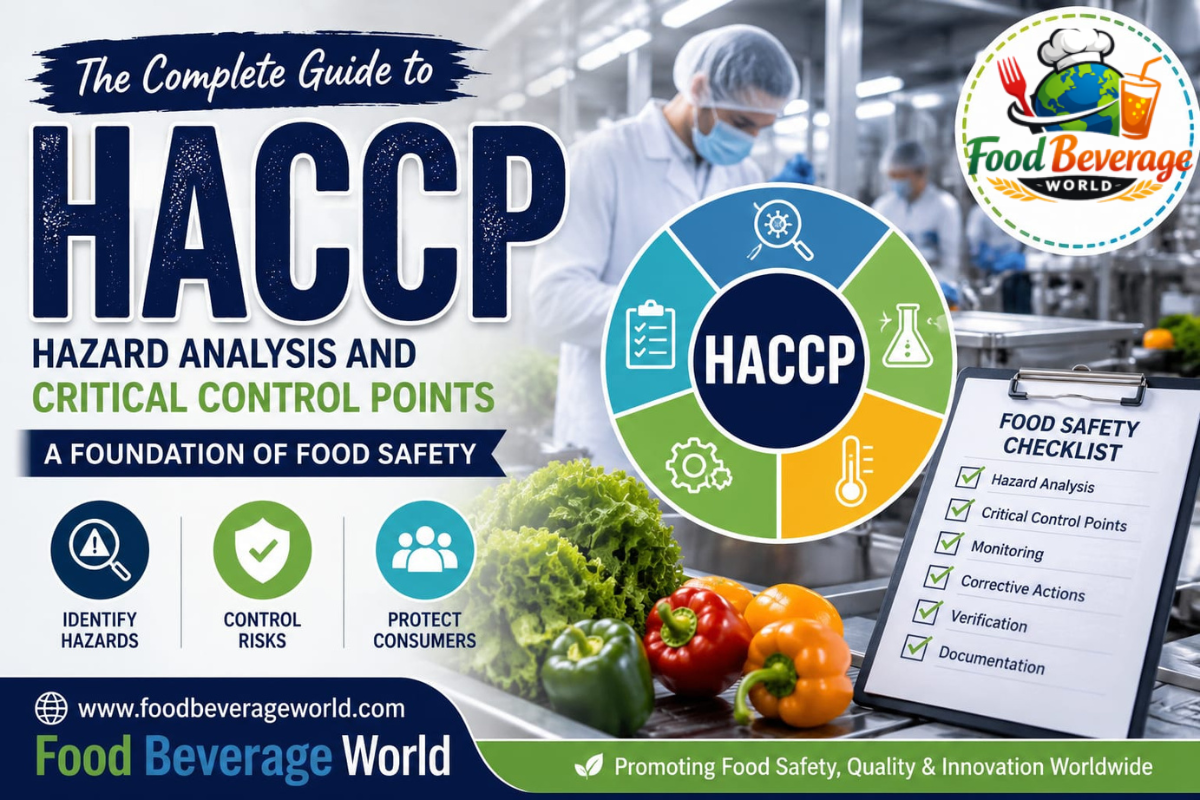
Food safety has become one of the most important concerns in the modern food and beverage industry. To ensure that food products remain safe for consumers, different management systems and standards are used worldwide. One of the most effective systems is HACCP (Hazard Analysis and Critical Control Points). It helps manufacturers identify and control potential hazards during food production. At Food Beverage World, we believe that understanding HACCP is essential for professionals working in food processing, quality control, and beverage manufacturing. HACCP is widely implemented in factories, restaurants, and food businesses to maintain product quality and consumer safety.
What Is HACCP?
HACCP stands for Hazard Analysis and Critical Control Points. It is an internationally recognized food safety management system designed to identify, evaluate, and control biological, chemical, and physical hazards that may affect food products.
Unlike traditional inspection methods that focus mainly on the final product, HACCP emphasizes preventive measures throughout the production process. The system helps companies detect risks before they become serious problems, ensuring safer food for consumers.
Today, HACCP is applied in various sectors, including beverage industries, dairy plants, meat processing facilities, and packaged food manufacturing companies.
History of HACCP
The history of HACCP dates back to the 1960s when the United States National Aeronautics and Space Administration (NASA) collaborated with the Pillsbury Company and the U.S. Army Laboratories. Their goal was to develop a food safety system that could guarantee the safety of food consumed by astronauts during space missions.
Traditional quality testing methods were not sufficient because even a small contamination could create serious health risks in space. Therefore, scientists developed HACCP as a preventive system that focuses on identifying hazards at every stage of production.
In the following decades, HACCP gained international recognition. In the 1980s and 1990s, many food safety organizations and governments adopted the system. Today, HACCP forms an important part of global food safety standards and regulations.
What Does HACCP Focus On?
HACCP focuses on identifying and controlling different types of hazards that may occur during food production. These hazards generally fall into three categories:
Biological Hazards
Biological hazards include bacteria, viruses, molds, and other microorganisms that can contaminate food and cause illness.
Chemical Hazards
Chemical hazards involve pesticides, cleaning agents, additives, and other harmful substances that may enter food products.
Physical Hazards
Physical hazards include foreign materials such as glass, metal fragments, plastic pieces, or stones that may accidentally contaminate food.
Importance of HACCP in the Food Industry
HACCP plays a critical role in improving food safety and product quality. It helps manufacturers reduce contamination risks, comply with legal requirements, and increase consumer confidence.
The food and beverage industry relies on HACCP because it provides a structured approach to hazard prevention rather than simply detecting problems after production. As food safety standards continue to evolve, HACCP remains one of the most trusted systems for protecting public health and ensuring the production of safe, high-quality food products.
HACCP Principles: A Complete Guide by Food Beverage World
Introduction to HACCP Principles
The HACCP Principles are the foundation of every food safety management system. HACCP, which stands for Hazard Analysis and Critical Control Points, is used worldwide to identify, evaluate, and control food safety hazards. These principles help food and beverage companies maintain product quality and protect consumers from biological, chemical, and physical contamination.
At Food Beverage World, we understand the importance of HACCP Principles in ensuring safe food production. The system is widely implemented in beverage industries, dairy plants, restaurants, and food processing facilities.
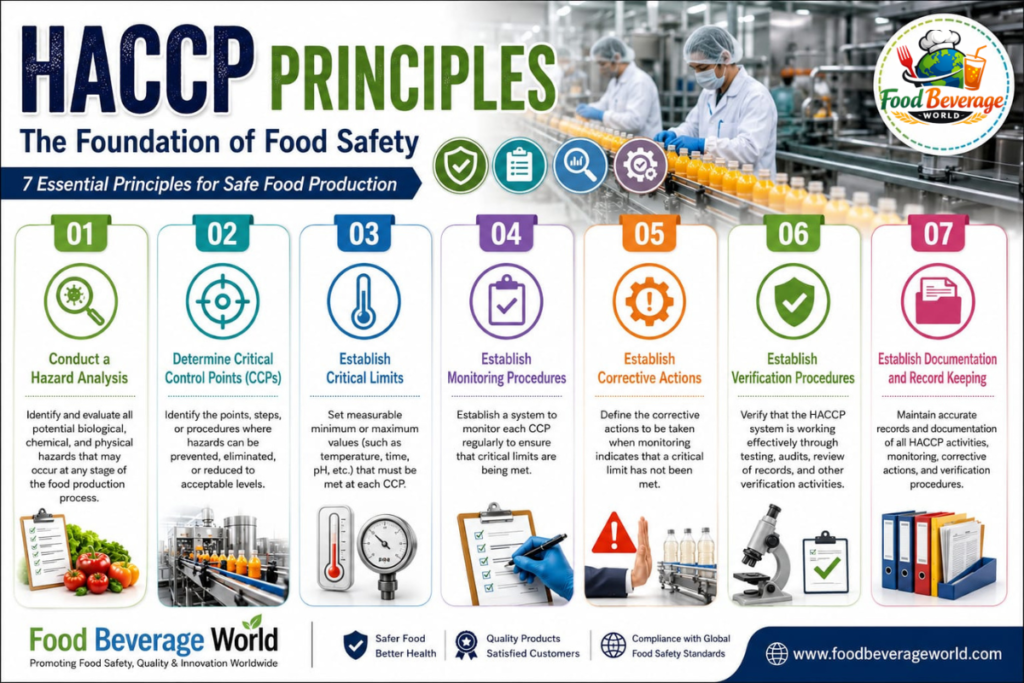
Principle 1: Conduct a Hazard Analysis
The first of the HACCP Principles is hazard analysis. In this step, companies identify all possible hazards that may occur during food production. These hazards may include bacteria, chemicals, allergens, or physical contaminants such as glass and metal fragments.
Principle 2: Determine Critical Control Points (CCPs)
Critical Control Points (CCPs) are the stages where hazards can be prevented, eliminated, or reduced to acceptable levels. Examples include pasteurization, temperature control, and metal detection systems.
Principle 3: Establish Critical Limits
Critical limits are the maximum or minimum values that must be maintained at each CCP. These limits may involve temperature, pH, pressure, or processing time.
Principle 4: Establish Monitoring Procedures
Monitoring ensures that each Critical Control Point remains under control. Companies regularly measure and record important parameters to verify that food safety standards are being followed.
Principle 5: Establish Corrective Actions
Corrective actions are implemented whenever monitoring shows that a critical limit has not been met. These actions help prevent unsafe products from reaching consumers.
Principle 6: Establish Verification Procedures
Verification confirms that the HACCP system is functioning effectively. This process may include audits, laboratory testing, equipment calibration, and record reviews.
Principle 7: Establish Documentation and Record Keeping
Documentation is one of the most important HACCP Principles. Companies maintain records of hazard analyses, monitoring activities, corrective actions, and verification procedures to demonstrate compliance with food safety requirements.
Why HACCP Principles Are Important
The HACCP Principles help organizations improve food safety, reduce contamination risks, comply with international regulations, and build customer trust. These principles are used across the global food and beverage industry because they focus on prevention rather than correction.
Food Beverage World believes that understanding HACCP Principles is essential for professionals working in quality assurance, quality control, and food manufacturing. By applying these principles effectively, companies can ensure the production of safe and high-quality food products.
Food Safety Management System
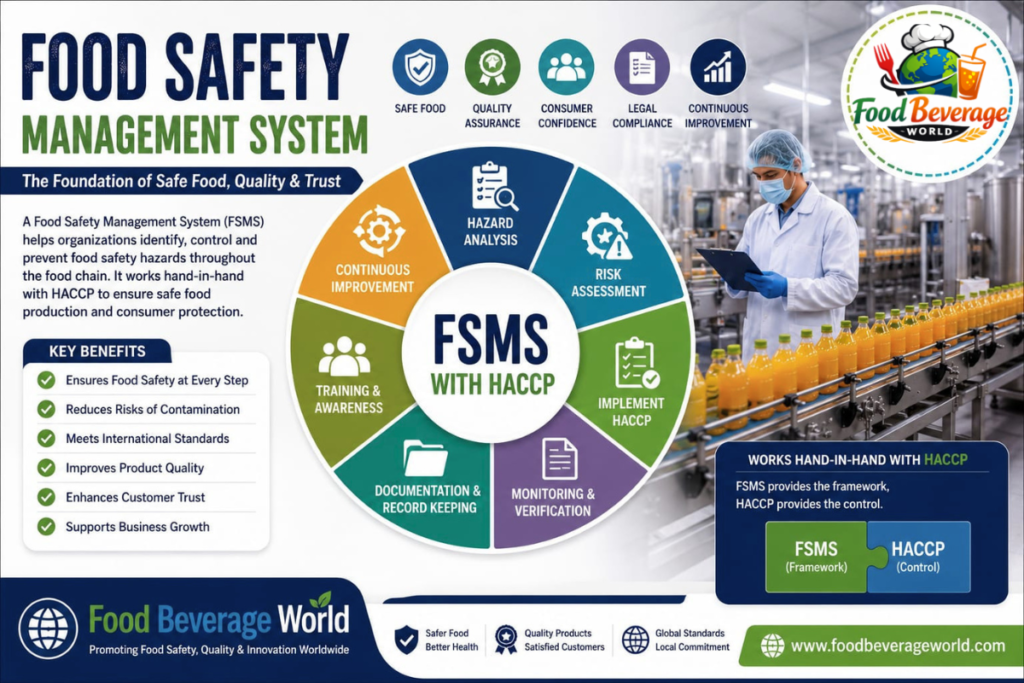
A Food Safety Management System (FSMS) is a structured framework that helps food businesses ensure the safety and quality of their products. In today’s food and beverage industry, companies face numerous challenges related to contamination, regulatory compliance, and consumer expectations. A well-designed Food Safety Management System enables organizations to identify hazards, implement preventive measures, and maintain consistent food safety standards throughout the production process.
The importance of a Food Safety Management System has increased significantly because consumers demand safe and high-quality products. Modern food industries rely on internationally recognized systems such as HACCP and ISO 22000 to control risks and improve operational efficiency. At Food Beverage World, we believe that understanding the relationship between HACCP and the Food Safety Management System is essential for professionals working in quality assurance, quality control, and food manufacturing sectors.
What Is a Food Safety Management System?
A Food Safety Management System is a set of policies, procedures, and controls that organizations use to manage food safety risks. It covers every stage of food production, including raw material handling, processing, packaging, storage, and distribution.
The main objective of a Food Safety Management System is to ensure that food products remain safe for consumers. It helps companies establish clear responsibilities, maintain documentation, monitor processes, and continuously improve their operations.
Many international standards, including ISO 22000, are based on the concept of a Food Safety Management System.
Relationship Between HACCP and Food Safety Management System
HACCP is one of the most important components of a Food Safety Management System. While FSMS provides the overall framework for managing food safety, HACCP focuses specifically on identifying and controlling hazards.
A Food Safety Management System includes management responsibilities, employee training, record keeping, internal audits, and corrective actions. HACCP works within this framework by identifying Critical Control Points (CCPs) and implementing preventive measures.
Without HACCP, a Food Safety Management System may not effectively control food safety hazards. Similarly, HACCP alone cannot function efficiently without the support of a complete management system.
The Role of Food Safety Management System in HACCP
The Food Safety Management System plays a vital role in ensuring that HACCP is implemented effectively within an organization.
Hazard Identification and Risk Assessment
One of the most important functions of a Food Safety Management System is to support hazard identification. It helps organizations recognize biological, chemical, and physical hazards before they affect food products.
Documentation and Record Keeping
Documentation is essential for HACCP implementation. The Food Safety Management System ensures that all procedures, monitoring records, corrective actions, and verification activities are properly documented.
Employee Training and Awareness
Employees play a key role in maintaining food safety. A Food Safety Management System provides training programs that help workers understand HACCP requirements and follow standard operating procedures.
Monitoring and Verification
Continuous monitoring and verification are critical elements of HACCP. The Food Safety Management System establishes procedures to ensure that Critical Control Points remain under control and that corrective actions are taken when necessary.
Regulatory Compliance
Food industries must comply with local and international regulations. A Food Safety Management System helps companies meet legal requirements and maintain compliance with food safety standards.
Key Components of a Food Safety Management System
An effective Food Safety Management System consists of several important elements:
- Food safety policies and objectives.
- Hazard analysis and risk assessment.
- HACCP implementation.
- Standard operating procedures.
- Employee training programs.
- Internal audits and inspections.
- Documentation and record management.
- Corrective and preventive actions.
- Continuous improvement processes.
Together, these components help organizations maintain product quality and consumer confidence.
Benefits of Implementing a Food Safety Management System
Implementing a Food Safety Management System offers many advantages to food businesses:
- Improves food safety and product quality.
- Reduces the risk of contamination.
- Enhances customer trust and satisfaction.
- Supports compliance with food safety regulations.
- Improves operational efficiency.
- Reduces product recalls and financial losses.
- Strengthens the reputation of the organization.
These benefits make FSMS an essential requirement for modern food and beverage companies.
Food Safety Management System in the Beverage Industry
The beverage industry depends heavily on the Food Safety Management System because products such as soft drinks, juices, bottled water, and dairy beverages require strict quality control.
Manufacturers use HACCP and FSMS to monitor pH levels, sanitation procedures, packaging integrity, and storage conditions. By implementing these systems, beverage companies can ensure that their products remain safe throughout the supply chain.
Conclusion
A Food Safety Management System provides the foundation for effective food safety management, while HACCP serves as one of its most important tools for hazard prevention. Together, they help organizations identify risks, establish control measures, and maintain compliance with international standards.
At Food Beverage World, we recognize that the combination of HACCP and a Food Safety Management System is essential for producing safe, high-quality food and beverage products. As food safety requirements continue to evolve, companies that implement strong management systems will be better prepared to protect consumers and succeed in the global market.
Frequently Asked Questions (FAQs)
What is a Food Safety Management System?
A Food Safety Management System (FSMS) is a structured framework that helps food businesses identify, control, and prevent food safety hazards throughout the production process.
What is the relationship between HACCP and a Food Safety Management System?
HACCP is an important part of a Food Safety Management System. While FSMS provides the overall framework for food safety, HACCP focuses on hazard analysis and critical control points.
Why is a Food Safety Management System important in the food industry?
A Food Safety Management System helps companies improve food safety, comply with regulations, reduce contamination risks, and increase customer confidence.
Which industries use a Food Safety Management System?
Food Safety Management Systems are widely used in beverage industries, dairy plants, food processing companies, restaurants, hotels, and packaging facilities.
What types of hazards are controlled by a Food Safety Management System?
A Food Safety Management System controls biological hazards such as bacteria, chemical hazards such as pesticides and cleaning agents, and physical hazards such as glass or metal fragments.
Is HACCP mandatory for a Food Safety Management System?
HACCP is considered one of the most important components of a Food Safety Management System and is required by many food safety standards and regulations.
How does a Food Safety Management System improve product quality?
A Food Safety Management System improves product quality by establishing monitoring procedures, employee training, documentation, and preventive controls.
What is the role of Food Beverage World in promoting food safety?
Food Beverage World provides information and educational content related to HACCP, food safety standards, quality control, and Food Safety Management Systems in the food and beverage industry.
good