Histoty
The history of beverages is very old. Humans have been consuming beverages such as water, milk, tea, and fruit drinks for thousands of years. The modern beverage industry began to develop during the 18th and 19th centuries, especially with the advent of carbonated drinks. In 1767, Joseph Priestley discovered a method of adding carbon dioxide to water, which became the foundation of carbonated beverages. Later, in the 19th century, companies started producing and selling soft drinks commercially. With the development of bottling, refrigeration, pasteurization, and modern food-processing technology, the beverage industry grew into a large global industry.
Introduction
The beverage industry is the sector where various beverages are produced, processed, packaged, and distributed. It includes products like carbonated soft drinks, bottled water, juices, energy drinks, and other flavored beverages. In this industry, quality, food safety, hygiene, and proper production processes are very important.
What Is a Beverage?
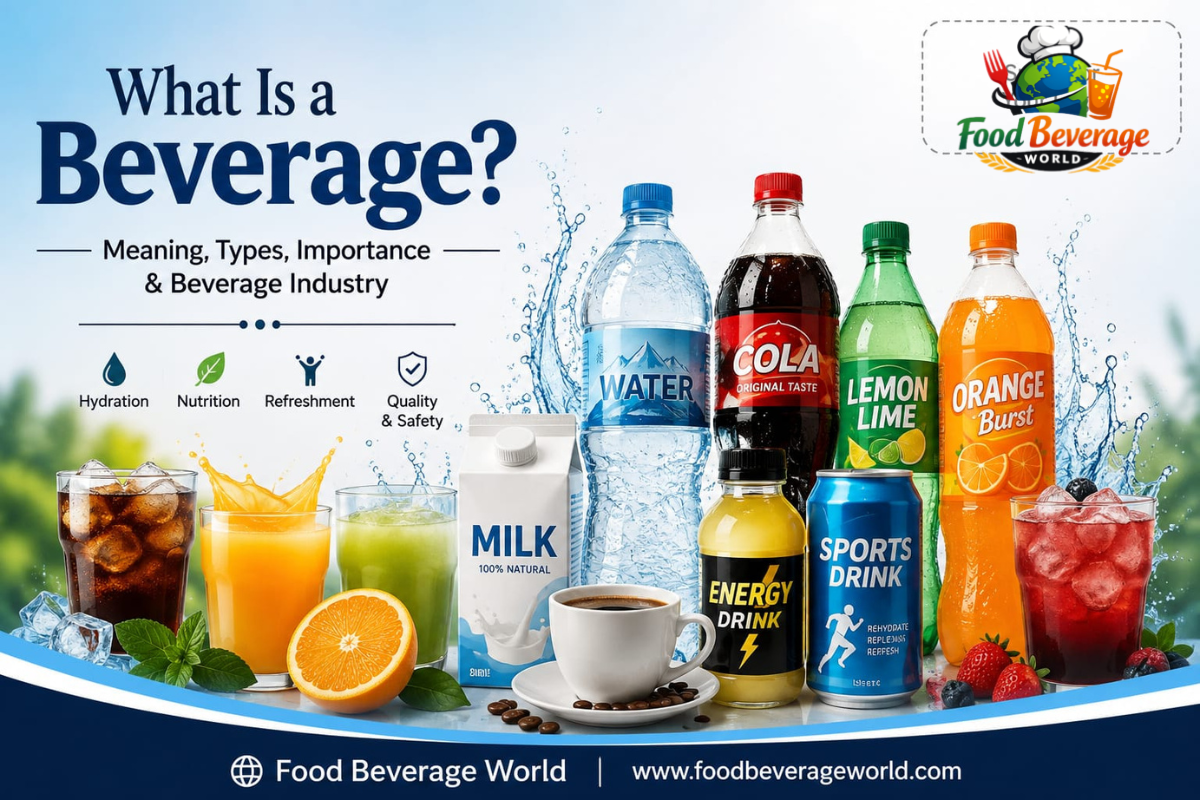
A beverage is any liquid that is prepared and consumed for drinking. Beverages are an essential part of everyday life because they help provide hydration, nutrition, refreshment, and enjoyment. The simplest and most important beverage is water, while other beverages include milk, tea, coffee, fruit juices, soft drinks, energy drinks, sports drinks, and flavored drinks.
In simple words, a beverage is a drink that people consume for hydration, taste, nutrition, or refreshment. Some beverages are consumed naturally, while others are produced through different industrial processes such as mixing, filtration, pasteurization, carbonation, filling, and packaging.
The modern beverage industry produces a wide variety of products to meet the needs and preferences of consumers around the world.
Beverage Meaning and Definition
The word beverage generally refers to a liquid intended for human consumption. Beverages can be classified into many categories depending on their ingredients, preparation methods, nutritional value, and purpose.
For example, water is mainly consumed for hydration, while milk provides nutrients such as protein and calcium. Fruit juices provide flavor and certain nutrients, whereas carbonated soft drinks are mainly consumed for taste and refreshment.
The beverage industry also focuses heavily on product quality, food safety, hygiene, packaging, and shelf life.
Why Is Beverage Important?
A beverage is important because fluids are essential for the normal functioning of the human body. Water helps maintain hydration, while certain beverages can provide nutrients, vitamins, minerals, electrolytes, or energy.
From an industrial perspective, beverages are also important because they represent one of the world’s major food and consumer-product sectors. Beverage manufacturers use modern technologies to produce safe, consistent, and high-quality products.
Different Types of Beverages
There are many different types of beverages available in the market. They can generally be divided into several major categories.
Carbonated Beverage
Carbonated beverages contain dissolved carbon dioxide (CO₂), which creates the characteristic bubbles and refreshing sensation. Examples include cola, lemon-lime drinks, soda water, and other carbonated soft drinks.
The production of carbonated beverages generally involves water treatment, syrup preparation, mixing, carbonation, filling, capping, labeling, coding, and packaging.
Non-Carbonated Beverage
Non-carbonated beverages do not contain added carbonation. Examples include bottled water, juices, fruit drinks, flavored water, tea, coffee, and some energy drinks.
Depending on the product, manufacturers may use processes such as filtration, pasteurization, homogenization, or other preservation methods to maintain product quality and safety.
Beverage Manufacturing Process
Modern beverage manufacturing involves several controlled steps. Although the process differs according to the type of product, many beverage plants follow a basic production sequence.
Water Treatment in Beverage Production
Water is one of the most important raw materials in many beverages. Before production, water may go through different treatment processes to remove unwanted particles, microorganisms, odors, and other impurities.
Common water-treatment technologies can include filtration, activated carbon treatment, reverse osmosis, UV treatment, and other appropriate processes.
Beverage Mixing and Processing
After water treatment, ingredients are mixed according to the product formulation. Depending on the beverage, ingredients may include sugar, flavors, acids, colors, preservatives, vitamins, minerals, or other approved ingredients.
The mixture is then processed according to specific quality and food-safety requirements.
Beverage Filling and Packaging
After processing, the beverage is transferred to the filling system. Bottles, cans, or other approved containers are filled with the product under controlled conditions.
After filling, containers are capped or sealed, labeled, coded, inspected, and packed for distribution.
Importance of Quality in Beverage
Quality is one of the most important factors in beverage manufacturing. Consumers expect every bottle or can of a product to have consistent taste, appearance, carbonation, volume, and safety.
Quality control may include checking parameters such as Brix, pH, acidity, carbonation level, temperature, CO₂ content, microbiological quality, bottle condition, fill volume, and packaging integrity.
Food Safety in Beverage Industry
Food safety is essential because beverages are consumed directly by people. Beverage manufacturers must control potential hazards throughout the production process.
Good Manufacturing Practices (GMP), sanitation programs, HACCP principles, quality control systems, and proper employee hygiene help manufacturers produce safe beverages.
Beverage Hygiene and Sanitation
Proper cleaning and sanitation of tanks, pipelines, fillers, bottles, equipment, and production areas are essential. Effective sanitation helps reduce the risk of contamination and protects product quality.
Beverage Industry and Its Importance
The beverage industry is a major part of the food and consumer-goods sector. It includes companies involved in manufacturing, packaging, distribution, marketing, and selling different types of beverages.
The industry provides employment opportunities in areas such as production, quality assurance, quality control, maintenance, engineering, laboratory testing, warehouse operations, supply chain, sales, and marketing.
Future of Beverage Industry
The beverage industry continues to develop with new technologies and changing consumer preferences. Manufacturers are increasingly focusing on healthier products, reduced sugar, functional beverages, sustainable packaging, energy-efficient production, and improved food-safety systems.
Conclusion
In conclusion, a beverage is a liquid prepared for human consumption and can serve purposes such as hydration, nutrition, refreshment, and enjoyment. From simple drinking water to advanced carbonated and functional beverages, this industry has become an important part of modern life.
Understanding beverage production also requires knowledge of water treatment, ingredient handling, processing, filling, packaging, quality control, and food safety.
Food Beverage World aims to provide useful and practical information about beverages, beverage manufacturing, quality assurance, food safety, processing technologies, and the modern beverage industry.
FAQs About Beverage
What Is a Beverage?
A beverage is any liquid prepared for human consumption. A beverage can provide hydration, nutrition, refreshment, or enjoyment. Common examples of beverage products include water, milk, juices, tea, coffee, soft drinks, and energy drinks.
What Are the Main Types of Beverages?
The main types of beverages include carbonated beverages, non-carbonated beverages, bottled water, fruit juices, energy drinks, sports drinks, tea, coffee, and milk-based beverages. Each beverage has different ingredients, processing methods, and nutritional characteristics.
How Is a Beverage Manufactured?
A beverage is manufactured through different processes depending on the product. A typical beverage production process may include water treatment, ingredient preparation, mixing, processing, carbonation when required, filling, capping, labeling, coding, and packaging. Quality and food-safety checks are performed throughout the beverage manufacturing process.
Why Is Quality Control Important in Beverage Production?
Quality control is important in beverage production because it ensures that every beverage meets required standards for taste, appearance, safety, consistency, and packaging. Parameters such as Brix, pH, acidity, carbonation, temperature, fill volume, and microbiological quality may be checked during beverage production.
Why Is Food Safety Important for Beverages?
Food safety is extremely important for beverage products because beverages are directly consumed by people. Proper hygiene, sanitation, GMP, HACCP principles, water treatment, and quality control help ensure that every beverage is safe and suitable for consumption.