Introduction
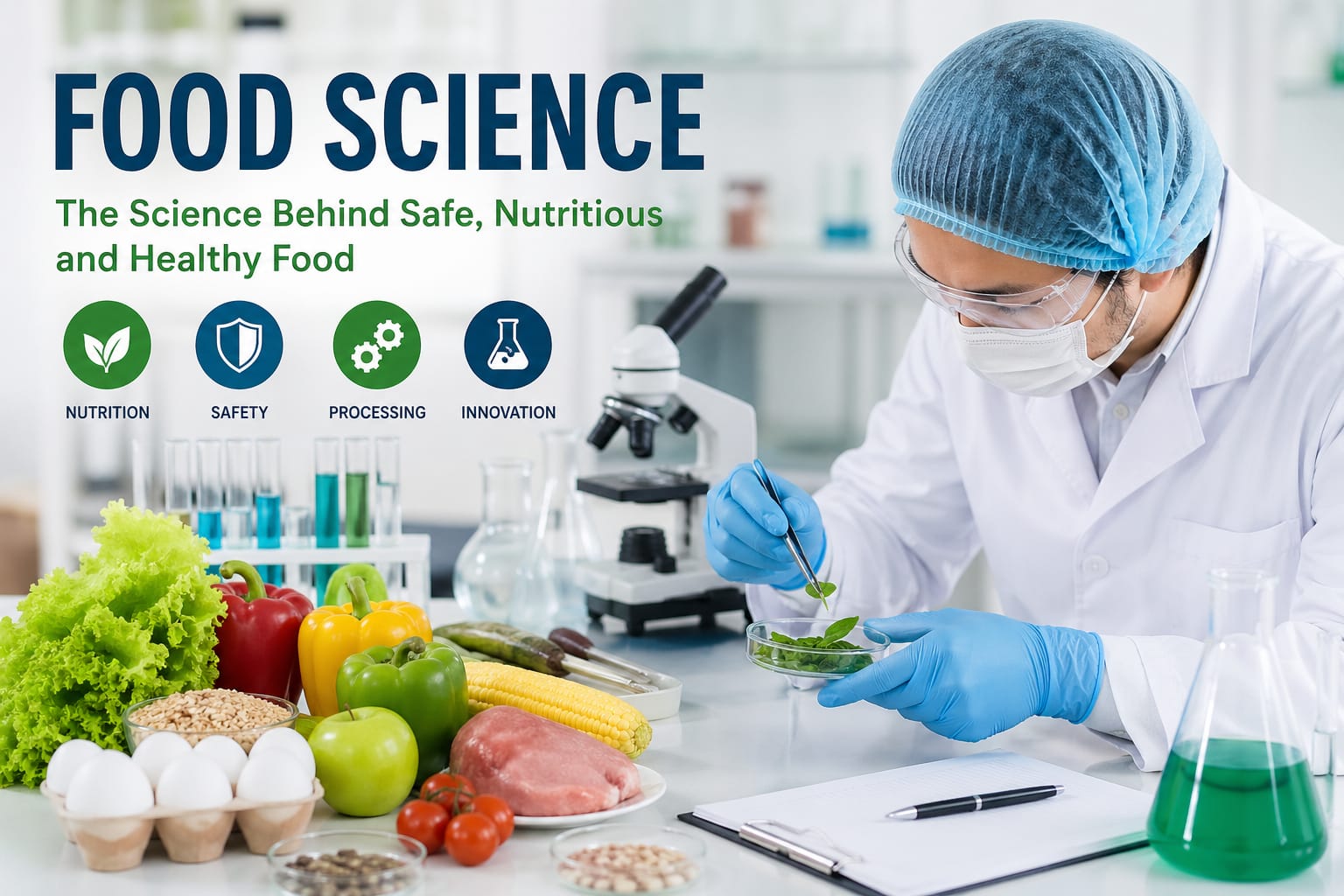
Food Science is an essential field that directly impacts our daily lives. The food we eat every day goes through various scientific processes to ensure it is safe, nutritious, and high in quality.
Food science is not just about cooking; it involves chemistry, biology, microbiology, and engineering to understand food better. It helps us know how food is produced, processed, preserved, and consumed.
What is Food Science
Food Science is the study of food, including its composition, processing, preservation, and safety. The main goal of food science is to improve food quality and ensure it is safe for consumption.
For example:
Pasteurizing milk
- Freezing vegetables
- Packaging food products
- All these processes are part of food science.
Main Branches of Food Science
1. Food Chemistry
Food chemistry studies the chemical components of food, such as:
- Proteins
- Carbohydrates
- Fats
- Vitamins
It helps explain food taste, color, and aroma.
2. Food Microbiology
This branch deals with microorganisms like bacteria and fungi.
- Beneficial bacteria (used in yogurt)
- Harmful bacteria (cause food poisoning)
3. Food Processing
Food processing involves converting raw food into consumable products.
Examples:
- Freezing
- Drying
- Canning
4. Food Preservation
Food preservation helps prevent food spoilage.
Methods include:
- Refrigeration
- Freezing
- Chemical preservatives
5. Nutrition
Nutrition studies how food affects human health and body functions.
Importance of Food Science
1. Food Safety
Food science ensures that food is free from harmful bacteria and safe to eat.
2. Improved Food Quality
It improves the taste, texture, and appearance of food.
3. Longer Shelf Life
Food can be stored for a longer time without spoiling.
4. Better Nutrition
Food science helps retain vitamins and minerals in food.
Food Processing Techniques
1. Freezing
Slows down bacterial growth and preserves food.
2. Drying
Removes moisture to prevent spoilage.
3. Canning
Stores food in airtight containers.
4. Pasteurization
Kills harmful bacteria by heating food (especially milk).
Role of Technology in Food Science
Modern technology has improved food production and safety:
- Advanced machinery
- Smart packaging
- Food testing laboratories
- Automation in the food industry
Food Safety
Food safety is critical to prevent diseases. Common Foodborne Illnesses:
- Food poisoning
- Diarrhea
- Infections
Safety Tips:
- Wash your hands properly
- Cook food thoroughly
- Use clean water
- Store food at the proper temperature
Careers in Food Science
Food science offers many career opportunities:
- Food Technologist
- Quality Control Officer
- Nutritionist
- Food Inspector
Challenges in Food Science
Some major challenges include:
- Increasing population
- Food shortages
- Food adulteration
- Environmental issues
Future of Food Science
The future of food science is very promising:
- Organic foods
- Lab-grown meat
- AI-based food systems
- Smart packaging
Conclusion
Food science plays a vital role in ensuring that the food we consume is safe, nutritious, and of high quality. It combines science and technology to solve food-related problems and meet the needs of a growing population. Understanding food science helps us make better food choices and live healthier lives.