Method of Food Preservation
Method of Food preservation is the process of treating and handling food in a way that prevents spoilage and maintains its nutritional value, taste, and quality for a longer period. Since ancient times, humans have used different methods to preserve food so it can be stored safely and consumed later. Food preservation is important because it reduces food waste, ensures food availability during emergencies or seasonal shortages, and protects food from harmful microorganisms such as bacteria, fungi, and molds.
One of the oldest methods of food preservation is drying. In this method, moisture is removed from food because microorganisms need water to grow. Fruits, vegetables, fish, and meat are often dried under sunlight or with special drying machines. Dried foods can be stored for many months without spoiling.
Another common method is refrigeration and freezing. Low temperatures slow down the growth of bacteria and other microorganisms. Refrigeration is suitable for short-term storage of foods like milk, vegetables, and cooked meals, while freezing is used for long-term preservation of meat, fish, and frozen vegetables. Frozen foods remain fresh for a long time if stored properly.
Canning is also a popular preservation technique. In this process, food is heated to kill bacteria and then sealed in airtight containers such as cans or jars. The airtight seal prevents microorganisms from entering the food. Canned foods like soups, fruits, and vegetables can last for several years.
Pickling is another effective method. Foods are preserved in vinegar, saltwater, or oil. The acidic environment created by vinegar stops the growth of harmful bacteria. Pickles, olives, and some vegetables are commonly preserved using this method. Similarly, salting is widely used to preserve meat and fish. Salt removes moisture from food and creates conditions unsuitable for bacterial growth.
Fermentation is a natural preservation method in which beneficial microorganisms convert sugars into acids or alcohol. Yogurt, cheese, bread, and kimchi are examples of fermented foods. Fermentation not only preserves food but also improves its flavor and nutritional value.
Modern technology has introduced advanced methods such as pasteurization and vacuum packaging. Pasteurization involves heating liquids such as milk and juice to destroy harmful bacteria without significantly affecting taste. Vacuum packaging removes air from food packages, reducing oxidation and bacterial growth.
Food preservation offers many advantages. It increases the shelf life of food, allows transportation over long distances, and provides access to seasonal foods throughout the year. However, some preservation methods may slightly reduce nutrients or alter taste and texture.
In conclusion, food preservation plays a vital role in human life. Different methods such as drying, freezing, canning, pickling, fermentation, and pasteurization help keep food safe and fresh for longer periods. With advances in science and technology, food preservation techniques continue to improve, ensuring better food safety and reducing global food waste.
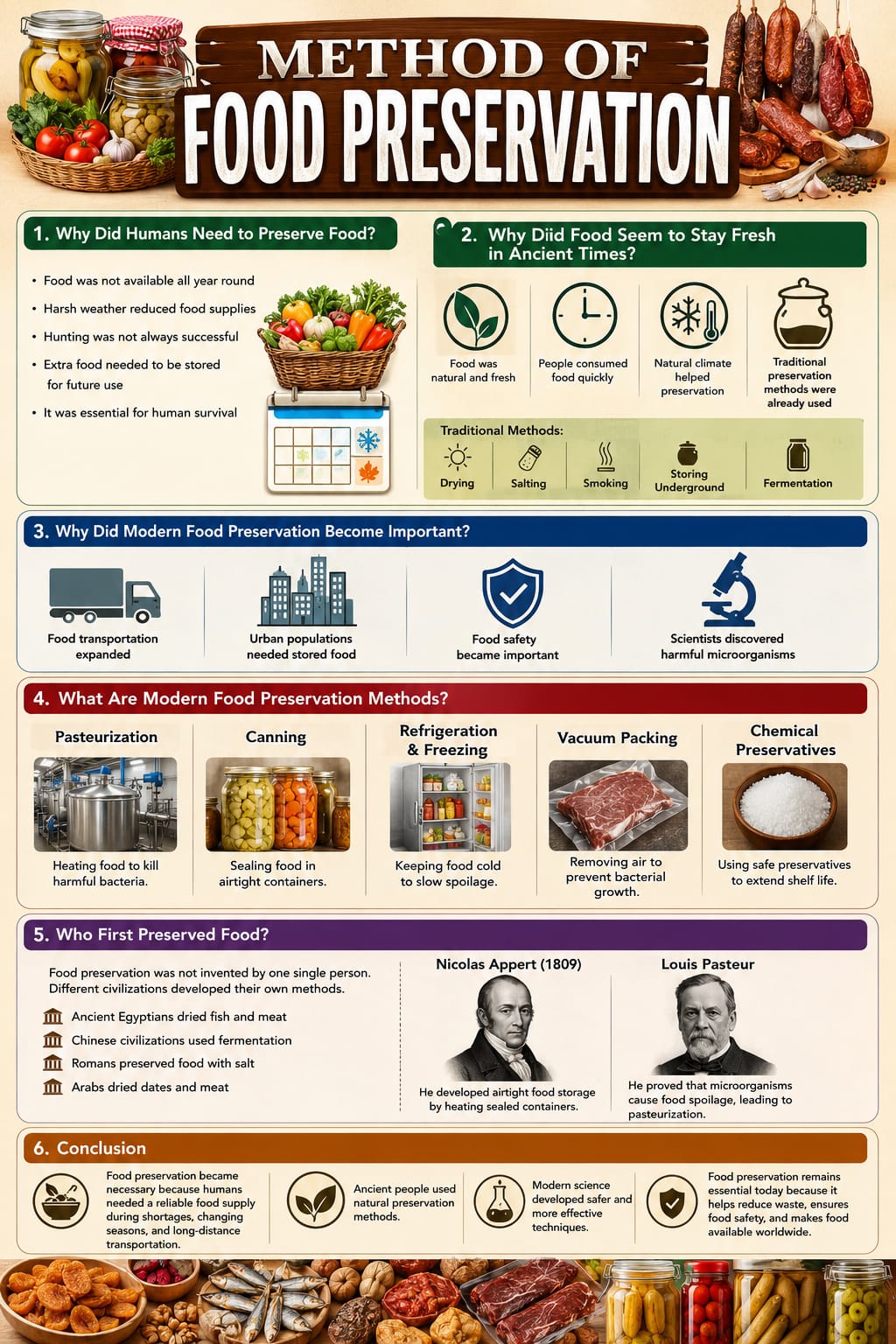
Why Did Humans Need to Preserve Food?
In ancient times, people hunted animals and gathered fruits and vegetables from nature. Food was not always available, and seasonal changes often caused shortages.
Humans needed to preserve food because:
- Food was not available all year round
- Harsh weather reduced food supplies
- Hunting was not always successful
- Extra food needed to be stored for future use
- This made food preservation essential for survival.
Why Did Food Seem to Stay Fresh in Ancient Times?
It may seem that food stayed fresh naturally in old times, but there were practical reasons behind it.
Food Was Natural and Fresh
Ancient food had no artificial chemicals or heavy processing, so it remained in its natural state.
People Consumed Food Quickly
People usually ate food soon after collecting or preparing it, so there was less chance of spoilage.
Natural Climate Helped Preservation
Cold climates and dry environments naturally slowed bacterial growth.
Traditional Preservation Methods Were Already Used
Ancient people preserved food through:
- Drying food under the sun
- Adding salt
- Smoking meat and fish
- Storing food underground
- Fermentation
These were early food preservation methods.
Why Did Modern Food Preservation Become Important?
As the population increased and cities developed, food needed to travel longer distances and stay fresh for extended periods.
Modern preservation became necessary because:
- Food transportation expanded
- Urban populations needed stored food
- Food safety became important
- Scientists discovered harmful microorganisms
This led to scientific preservation methods.
What Are Modern Food Preservation Methods?
Today, food is preserved using advanced technologies such as:
Pasteurization
Heating food to kill harmful bacteria.
Canning
Sealing food in airtight containers.
Refrigeration and Freezing
Keeping food cold to slow spoilage.
Vacuum Packing
Removing air to prevent bacterial growth.
Chemical Preservatives
Using safe preservatives to extend shelf life.
Who First Preserved Food?
Food preservation was not invented by one single person. Different civilizations developed their own methods.
Examples include:
- Ancient Egyptians dried fish and meat
- Chinese civilizations used fermentation
- Romans preserved food with salt
- Arabs dried dates and meat
However, modern food preservation began with
- Nicolas Appert
in 1809, when he developed airtight food storage by heating sealed containers.
Later,
- Louis Pasteur
proved that microorganisms cause food spoilage, leading to pasteurization.
Conclusion
Methods of Food preservation became necessary because humans needed a reliable food supply during shortages, changing seasons, and long-distance transportation. Ancient people used natural preservation methods, while modern science developed safer and more effective techniques. Food preservation remains essential today because it helps reduce waste, ensures food safety, and makes food available worldwide.
👍 Good
Great info